Last updated October 15, 2026








Free written scope consultation - allowances, timeline, and change-order rules on paper before a single trade is scheduled
Construction Warning Signs: A West Palm Beach Homeowner’s Reference Guide
Most warning-sign guides focus on outright fraud: the contractor who demands full payment upfront, the one who has no license at all, the crew that disappears after demolition. Those matter, but West Palm Beach homeowners with a few projects behind them know a quieter truth: the most expensive contractor problems are usually legal. They involve behaviors that look reasonable in the moment but predict cost overruns, scheduling abandonment, or work that fails inspection weeks after the crew is gone. This guide walks through those subtler signals, the ones experienced Elmstead Remodeling West Palm Beach home clients have learned to spot before signing anything.
Styles & brands we work with


Quick Answer
The most reliable construction warning signs in West Palm Beach are a verbal estimate paired with a delayed written contract, vague materials specifications, a fast-track permit promise, and no named subcontractors before work begins. Each suggests the contractor is managing your expectations rather than managing the project. The fix is the same in every case: ask for the document, the brand name, the subcontractor’s license number, or the lien waiver before money changes hands. For more guidance, see our step-by-step guide to hiring a construction contractor in West Palm Beach.
Table of Contents
- The Verbal Estimate That Never Becomes a Written Contract
- The Suspiciously Fast Permit Promise
- The Materials List That Reads Like a Guessing Game
- The Subcontractor Transparency Test
- Change-Order Behavior: The Dispute Being Built in Real Time
- Lien Waivers: The Document Nobody Mentions Until It’s Too Late
- Scheduling Signals That Predict Abandonment
- Payment Structure: What the Deposit Asks You
- Common Mistakes to Avoid
- When to Call a Professional
- Frequently Asked Questions
- The Bottom Line
The Verbal Estimate That Never Becomes a Written Contract
A contractor who gives you a verbal estimate and says the written contract “comes later” is telling you something important. In Florida, a home improvement contract over $2,500 is legally required to be in writing. A contractor who skips that step isn’t unaware, they’re choosing to. They know what the statute says. They also know that without a written scope of work, every dispute that follows becomes a he-said-she-said conversation with no resolution path.
We’ve watched this play out repeatedly across Palm Beach County. The homeowner agrees to a verbal number. The crew starts. The project changes. The final invoice arrives 40% higher than the number discussed at the kitchen table. And the homeowner has no document to point to because the “contract” was a handshake and a smile.
Here is what to ask for before any work begins, no exceptions:
- A written scope of work that names each phase: demolition, rough plumbing, electrical, drywall, finish carpentry, paint, final clean.
- A written price attached to that scope, with a clear statement of what is and is not included.
- A payment schedule tied to milestones, not dates. “25% at rough inspection” means something. “25% on March 15th” means nothing if the crew has not shown up.
- A start and completion window in writing, even if the window shifts. A range is honest. A shrug is not.
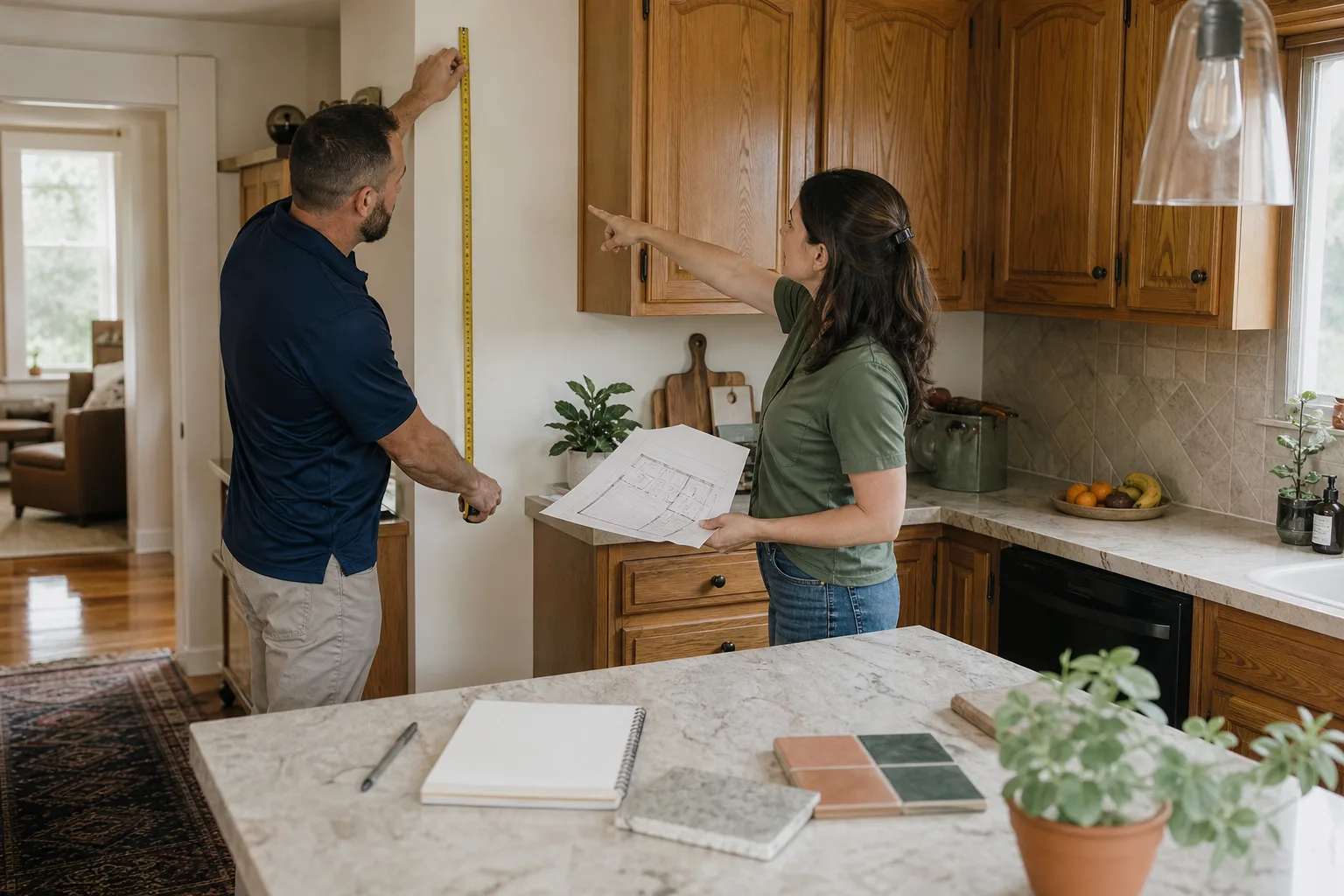
Elmstead Remodeling gives a written price before any work starts, every time, on every project. That is not a sales tactic. It is the only way a family can plan a kitchen renovation around school schedules and nap times without guessing. A General Contractor in West Palm Beach who cannot produce a written price is asking you to underwrite their uncertainty.
The Suspiciously Fast Permit Promise
In Palm Beach County, structural permits regularly take 3 to 6 weeks. That is not a failure of the system. It is the system working: plans get reviewed, code compliance gets checked, the property record gets pulled. When a contractor promises a permit in “a few days” for work that requires structural review, they are not describing efficiency. They are describing one of two things: they have not actually pulled a permit before in this county, or they plan to start work before the permit clears and backfill the paperwork later.
Both are warning signs.
The first is inexperience. West Palm Beach has its own building department, its own inspectors, its own quirks around coastal construction requirements and wind-load ratings. A contractor who has navigated that process knows what a realistic timeline looks like. A contractor who promises a one-week turnaround on a kitchen remodel permit has either never done it here or is telling you what you want to hear.
The second is worse. Starting work before a permit is issued is a code violation. It can trigger stop-work orders, fines, and in the worst cases, a requirement to expose finished work so an inspector can see what is behind the wall. We’ve seen homeowners in neighborhoods from El Cid to Flamingo Park left with open walls and an inspector’s red tag because a contractor “expedited” the process by skipping it.
What a realistic contractor says: “We will file the permit, and we will wait for it to clear before we start structural work. That usually takes several weeks. Here is what we’ll do in the meantime: finalize material selections, order cabinets, and confirm the subcontractor schedule.” That is the honest answer. Anything dramatically faster deserves a follow-up question.
The Materials List That Reads Like a Guessing Game
Here is a materials line from a real bid we reviewed recently: “Tile: $4,200.” That is it. No brand. No grade. No PEI rating for floor traffic. No coefficient of friction for a bathroom floor where a child will stand barefoot. Just “tile.” Here is what that line actually means: the contractor will buy whatever tile is cheapest at the supplier that week, and the homeowner will live with the result for fifteen years.
The materials list is where vague language hides future substitutions. Look for these specific red flags:
- “Tile” instead of a named porcelain or ceramic with a PEI rating and a slip-resistance class for wet areas.
- “Lumber” instead of pressure-treated grade, kiln-dried, or engineered lumber specifications for load-bearing applications.
- “Paint” instead of a brand and line. A $30 gallon and an $80 gallon both say “paint.” One covers in two coats and lasts eight years. The other needs three coats and fails in five.
- “Fixtures” instead of Kohler, Moen, or Grohe, or a named equivalent. Named brands carry manufacturer warranties. “Fixtures” carries nothing.
- “Countertop” instead of Cambria, Silestone, or Caesarstone with a named color and finish. Quartz brands vary meaningfully in resin content, hardness, and warranty terms.
When you see vague specs, ask the contractor to name the product. If they cannot, or if they say “we’ll finalize that later,” understand what is happening: the substitution is not a risk. It is the plan. A materials list with named brands is a materials list the contractor expects to be held to. For example, our Kitchen Remodeling in West Palm Beach projects specify cabinets by KraftMaid or Wellborn, countertops by Cambria or Silestone, and fixtures by Kohler or Moen, because those are products with warranties a homeowner can verify independently. The name matters. The name is the protection.
The Subcontractor Transparency Test
Most general contractors in West Palm Beach do not employ a full-time electrician and a full-time plumber on staff. They use licensed subcontractors. That is normal and good, because Florida requires those trades to carry their own licenses and insurance. What is not normal is a GC who cannot tell you who those subcontractors are before work starts.
Here is the test. Ask this exact question: “Who is your licensed electrician, and what is their license number?” Then ask the same about the plumber. A legitimate general contractor will answer without hesitation. They have worked with the same subs for years. They know the license numbers because they have pulled permits that list those numbers. If the answer is “we have a guy” or “we’ll line that up when we get there,” the GC does not have a confirmed electrician yet. They are hoping to find one, at a price, on your timeline.
This matters for three reasons. First, an unconfirmed subcontractor means an unconfirmed schedule. If the electrician is not booked, the project is not booked. Second, unlicensed subcontractor work can void your homeowner’s insurance coverage for anything related to that work. If an unlicensed electrician wires your new kitchen and there is a fire, you may be alone with the loss. Third, a GC who cannot name their subs has not done the coordination work that separates a general contractor from a project manager with a pickup truck.
In our experience across West Palm Beach, a contractor who can name their plumber, electrician, and tile installer by company name before the contract is signed is a contractor who has done this before. That is the entire qualification.
Change-Order Behavior: The Dispute Being Built in Real Time
Changes happen on almost every remodel. A wall gets opened and there is unexpected termite damage. A homeowner decides mid-project they want a different tile. The question is not whether changes will occur but whether they get documented. A contractor who verbally agrees to extras without putting anything in writing is not doing you a favor. They are building a dispute.
Here is how an undocumented change order becomes a problem. The homeowner and contractor agree verbally that adding a pot filler above the range will cost “about $800.” The contractor does the work. The final invoice shows $1,600. The homeowner says “you said $800.” The contractor says “that was before we saw the plumbing situation.” Neither has anything in writing. The homeowner has already received the work. The contractor has already paid the plumber. Now they are negotiating from positions that have nothing to do with fairness and everything to do with leverage.
The fix is simple and standard in professional construction:
- Get the change order in writing before the extra work begins. It should state what is being added, what is being removed, and the exact dollar change.
- Sign it or acknowledge it in writing, even by email or text. “Approved” sent from your phone is enough to create a record.
- Attach it to the original contract. The change order becomes part of the scope. No separate ledger. No memory games.
A contractor who documents change orders protects themselves and you. A contractor who avoids documenting them is signaling that they prefer ambiguity. In five years of estimating, ambiguity has never once worked in the homeowner’s favor.
Lien Waivers: The Document Nobody Mentions Until It’s Too Late
In Florida, when a subcontractor or material supplier is not paid, they can place a lien on your property, even if you have already paid the general contractor in full. This is the mechanic’s lien system working as designed. The supplier who delivered the drywall does not have a contract with you. They have a contract with the GC. If the GC does not pay them, the supplier’s remedy is against the property where the drywall now lives: your house.
This is why lien waivers exist, and why the absence of one at each payment milestone is a warning sign.
A lien waiver is a document signed by the subcontractor or supplier that says, in effect, “I have been paid through this date for work completed through this date, and I waive my right to lien the property for that amount.” You should receive one at every payment milestone: after demo, after rough-in, after drywall, after finish, after final inspection. The waiver should come from each sub and each major supplier, not just from the general contractor.
Here is what to ask before you make your first progress payment:
- “Will you provide lien waivers from each subcontractor and supplier at each payment milestone?”
- “Can you show me the waiver template you use?”
- “Will the final waiver cover all work completed to date, including work done by subs?”
A contractor who has never heard of a lien waiver, or who says “we don’t really do that,” or who says “don’t worry about it, we pay our people” is a contractor asking you to trust them with a legal risk that belongs to you alone. We provide lien waivers on every project because the alternative puts the homeowner’s deed on the line for someone else’s bookkeeping. That is not a reasonable ask.
Scheduling Signals That Predict Abandonment
Construction scheduling in West Palm Beach is genuinely hard. The humidity slows drywall mud drying times in summer. The afternoon thunderstorms pause exterior work. Material deliveries from national suppliers arrive on their own schedules, not yours. A good contractor builds that reality into the timeline. A contractor about to abandon your project gives different signals.
Watch for these patterns before you sign:
- The crew is “between jobs” right now. That is sometimes true. It is also sometimes the signal that the contractor cannot keep a consistent schedule and is grabbing work opportunistically. Ask what project they just finished and when. Then ask if you can speak to that client.
- No named start date. “We’ll get you on the schedule soon” is not a schedule. A contractor who cannot commit to a start week before the contract is signed will not suddenly find certainty after it is signed.
- Multiple projects running simultaneously with one crew. Many good GCs run two or three jobs at once. The question is whether each job has a dedicated crew lead and a written schedule. If the same three guys are supposed to be at your job and another job in the same week, one of you is getting shorted.
- The phone goes to voicemail during business hours. Before signing, call the contractor’s office on a Tuesday at 10am. If a live person answers, you have learned something. If you leave a message and wait three days for a callback, you have learned something else. We staff phones with a live person 24/7 because a family in the middle of a remodel should never wonder whether anyone is listening.
Scheduling abandonment often looks like this in practice: the crew starts strong, demo happens fast, and then the pace collapses. Days go by with no one on site. The homeowner calls. The contractor says they are “wrapping up another job” or “waiting on material.” Sometimes that is true. Sometimes the crew has been pulled to a bigger job because that homeowner is angrier. A written schedule with milestone dates gives you standing to ask the hard questions. A handshake gives you nothing.
Payment Structure: What the Deposit Asks You
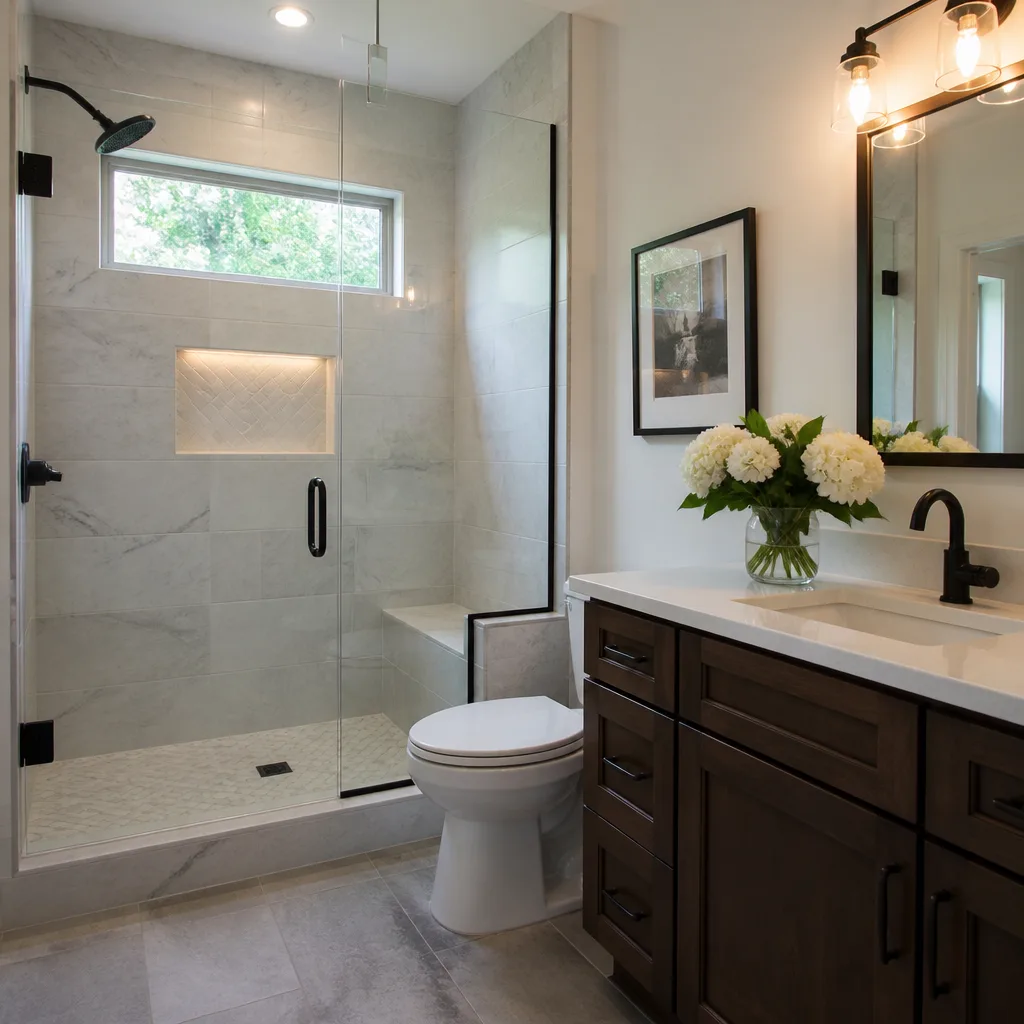
The deposit a contractor requests tells you a lot about how they run their business. In Florida, there is no statutory cap on deposits for residential construction, which means the market sets the norm. For most Bathroom Remodeling in West Palm Beach projects, a deposit of 10% to 30% is common, depending on project size and whether materials need to be ordered upfront. A deposit of 50% or more for a project that has not started is a warning.
When a contractor asks for half the job cost before a single tool comes out of the truck, ask yourself what that money is for. If materials need to be ordered, ask for invoices from the supplier. If the contractor says they need the cash “to secure the crew,” they are telling you that they are financing their payroll with your deposit. That is a sign of an undercapitalized business, and undercapitalized businesses are the ones that disappear mid-project when cash runs out.
Here is a payment structure that protects both parties:
- Initial deposit: 10% to 30%, enough to order materials and reserve the schedule. Tied to a start date.
- Progress payment after rough-in: Paid when plumbing and electrical pass inspection. Not before.
- Progress payment after drywall and finish: Paid when walls are closed and surfaces are installed.
- Final payment: Paid after final inspection passes, the punch list is complete, and you have a final lien waiver in hand.
Never pay 100% upfront. Never let progress payments get ahead of the work. A contractor who insists on a payment schedule that front-loads risk onto you is a contractor telling you they do not have the balance sheet to finish the job on their own working capital.
Common Mistakes to Avoid
- Accepting a verbal estimate and waiting for the contract to arrive later. In Florida, a home improvement contract over $2,500 must be in writing. If the contract does not exist, neither does your protection.
- Not verifying the contractor’s license and insurance before work starts. Florida requires a state license for general contractors, and West Palm Beach requires local permitting. Ask for the number. Then verify it on the Florida DBPR website. It takes five minutes.
- Paying for work before it is done. Payment tied to milestones protects you. Payment tied to dates protects the contractor. If the crew is two weeks behind schedule, a date-based payment is still due. A milestone-based payment is not.
- Signing a contract with vague materials language. “Quality materials” is not a specification. Named brands with named model numbers are a specification. Without them, you have agreed to whatever shows up.
- Skipping the lien waiver conversation entirely. A mechanic’s lien can attach to your property even after you have paid the GC in full. If you do not ask for lien waivers at each payment, you are betting your title on someone else’s payment habits.
- Believing a fast permit promise. Structural permits in Palm Beach County take weeks. A contractor who promises days is promising something they cannot deliver or something that violates code.
- Not calling the contractor’s references. Ask for two clients from the last twelve months. Call them. Ask one question: “Would you hire them again, and if not, why not?” The answer is worth more than any portfolio photo.
When to Call a Professional
If you are planning a remodel in West Palm Beach and any of the warning signs above sound familiar, it is easier to replace a contractor before the contract is signed than after the drywall is up. Not sure whether to tackle it yourself? Read our DIY vs Professional Construction: The West Palm Beach Homeowner’s Decision Guide. The moment you notice vague materials language, a missing lien waiver conversation, or a verbal price that never becomes a written one, stop and get a second opinion. A professional contractor will answer your questions directly, will document the price in writing before any work starts, and will protect your home while the crew is in it: shoe covers at the door, drop cloths on the floors, and a photo of the clean-up before the crew leaves. Elmstead Remodeling West Palm Beach offers free estimates in West Palm Beach. Call (728) 203-3270 and a live person will answer, day or night.
Frequently Asked Questions
The most common warning sign is a verbal estimate that never becomes a written contract, which is especially risky in Florida because home improvement contracts over $2,500 are legally required to be in writing. A contractor who does not produce one is either unaware of state law or testing whether you are the kind of homeowner who will not ask. Call (728) 203-3270 to speak with a contractor who puts the price in writing before any work starts.
Structural permits in Palm Beach County regularly take 3 to 6 weeks, depending on the scope and the review backlog at the building department. A contractor who promises a permit in a few days is either inexperienced with local requirements or planning to start work before the permit clears, which is a code violation and can trigger a stop-work order. A realistic timeline is the honest answer.
A materials list should name specific brands and product lines for every major item: cabinet manufacturer and door style, countertop brand and color, fixture brand and model, flooring material and grade, and paint brand and line. Vague terms like “tile” or “lumber” signal that the contractor plans to substitute cheaper materials after the contract is signed. Named brands give you something to verify and a warranty to enforce.
You need lien waivers because in Florida, subcontractors and material suppliers can place a mechanic’s lien on your property if they are not paid, even when you have already paid the general contractor in full. A lien waiver from each sub and supplier at every payment milestone proves they have been paid through that date and waives their right to lien your home for that amount. Without that document, you are carrying the risk for payment disputes that are not yours.
A typical deposit for a residential remodel in West Palm Beach is 10% to 30% of the project cost, enough to order materials and reserve the schedule. A deposit of 50% or more before work starts is a warning sign that the contractor is using your money to finance their payroll or other jobs. Ask what the deposit covers, and ask for supplier invoices if the deposit is meant to purchase materials.
A change order is a written document that records a change to the original scope of work and the exact dollar amount of that change. It should be created and signed before the extra work begins, not after the invoice arrives. A contractor who verbally agrees to changes without documenting them is creating a situation where the final bill can grow without any written record of what was agreed to. Call (728) 203-3270 for a free estimate from a contractor who documents every change in writing.
The Bottom Line
Legal contractor behaviors cause more financial damage than outright scams because they are easy to miss until the consequences arrive. The verbal estimate that never becomes a contract. The vague materials list. The fast permit promise. The change order that exists only in conversation. The lien waiver nobody offers until it is too late. Each is a signal the contractor is managing your expectations instead of managing the project. The protection is simple: written price, named brands, named subcontractors, documented changes, lien waivers at every payment, and a permit timeline that matches reality in Palm Beach County. Ask for those things before you sign. A contractor worth hiring will not flinch at any of them.
Written by Graham Stein, Owner at Elmstead Remodeling West Palm Beach, serving West Palm Beach since 2005.
See the difference
 Before
 After
After Before
 After
After Before
 After
After